Keep Your Needlepoint Threads Tidy with These Handy Binder Rings

chatgpt image may 22, 2026, 03 10 02 pm

If you’ve ever opened a project bag and found your beautiful threads looking like a tiny spaghetti tornado… welcome to the club. Needlepoint chaos has entered the chat.

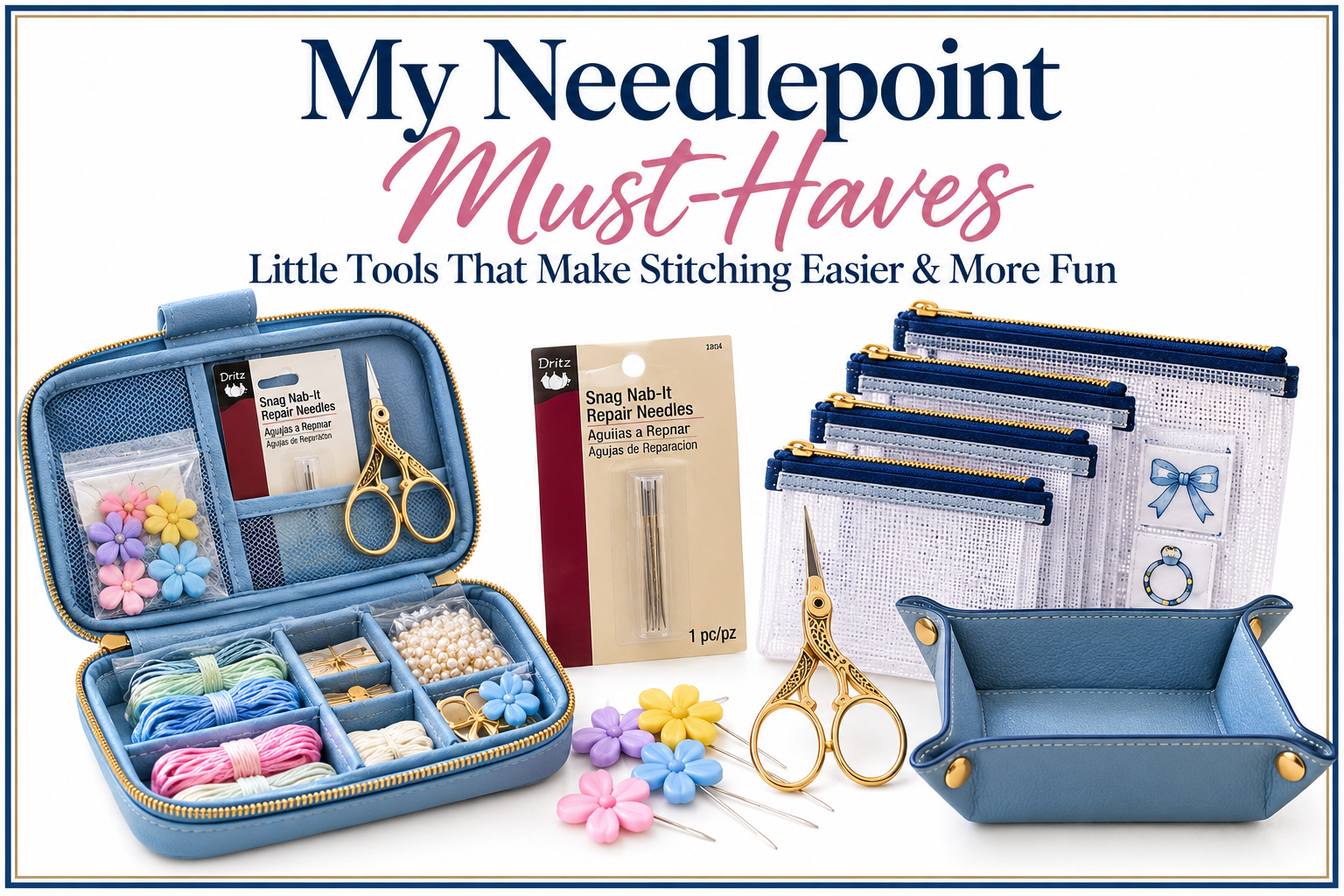
Lately I’ve been using these colorful wire binder rings for organizing threads with my canvas kits and honestly? They are such a simple little game changer.

chatgpt image may 22, 2026, 03 13 28 pm

5

Why I Love Them

These rings are lightweight, easy to open, and perfect for keeping your threads grouped together by project. I especially love them for:

  • Small needlepoint ornaments
  • Coaster kits
  • Travel stitching bags
  • Seasonal WIPs
  • Grab-and-go project organization

The bright colors also make it easy to separate canvases by season, customer orders, or thread families. Orange for autumn, blue for coastal, purple for Halloween… because yes, even our thread organizers deserve personality.

How I Use Them

I typically place:

  • Pre-cut thread bundles directly onto the ring
  • Thread cards onto the ring
  • Stitch guide tags or mini labels with the canvas name
  • Sometimes even a needle minder or charm for fun

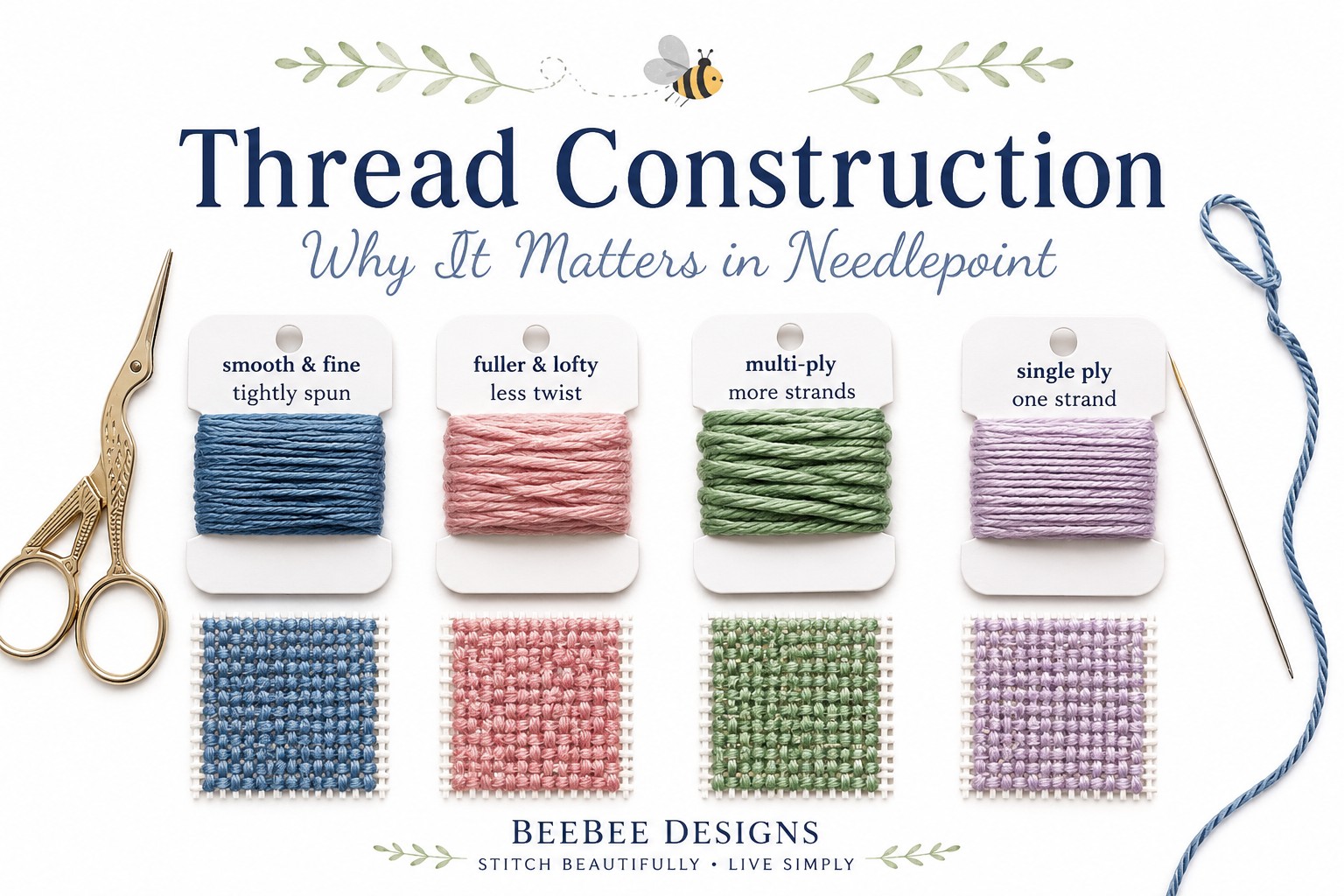
The little white thread cards pair perfectly with them and keep fibers smooth and easy to identify while stitching.

Perfect for Kit Packaging

If you sell kits or kitted canvases, these are adorable gifts. They instantly make the project feel more organized and especially for beginners who may feel intimidated by loose fibers.

They fit beautifully with:

  • Preppy coastal palettes
  • Chinoiserie color stories
  • Seasonal ornament collections
  • Small beginner-friendly projects

.

BeeBee Tip 🐝

Use different ring colors for mesh count:

  • 14 mesh = one color
  • 18 mesh = another

Your future self will thank you at 11 PM when three projects are open on the table and all the blues suddenly look the same.

Happy stitching and happy organizing. The pretty little details matter. ✨

You can find them at most hoppy shops. I ordered mine from Amazon. Love the assorted colors. Happy Stitching.

Amazon

50Pcs Metal Wire Keychains,6" Wire Key Rings Kit,304 Stainless Steel 1.5mm Colored Coated Keychain Cable Loops Connecter


We earn a commission if you make a purchase, at no additional cost to you.

Designed for stitchers who believe fall can absolutely wear blue and white

chatgpt image may 11, 2026, 04 48 43 pm

There’s something about blue and white chinoiserie mixed with a touch of autumn that never goes out of style. 💙🎃

This little gingham pumpkin canvas was designed with cozy Nantucket charm in mind — classic blue florals, soft fall tones, and a delicate gold accent line on the stem that gives it just the right pop.

Printed on 14 count mesh and sized at 4 inches, it’s the perfect small project for a relaxing weekend stitch or a beautiful finished ornament, bowl filler, or acrylic insert.

I love how this design blends preppy coastal style with warm autumn comfort… like pumpkin spice with a seaside breeze.

Available now at BeeBee Designs:
www.ThePamperedIntrovert.com
and Etsy:
www.etsy.com/shop/MsBeeBeeDesigns

#needlepoint #grandmillennialstyle #chinoiserie #coastalgrandmother #needlepointcanvas #fallneedlepoint #nantucketstyle #preppydecor #pumpkindecor #needlepointing #coastalstyle

Diagonal Mosaic Stitch

1731a354 7146 457c bb47 bc80d47cc8f2

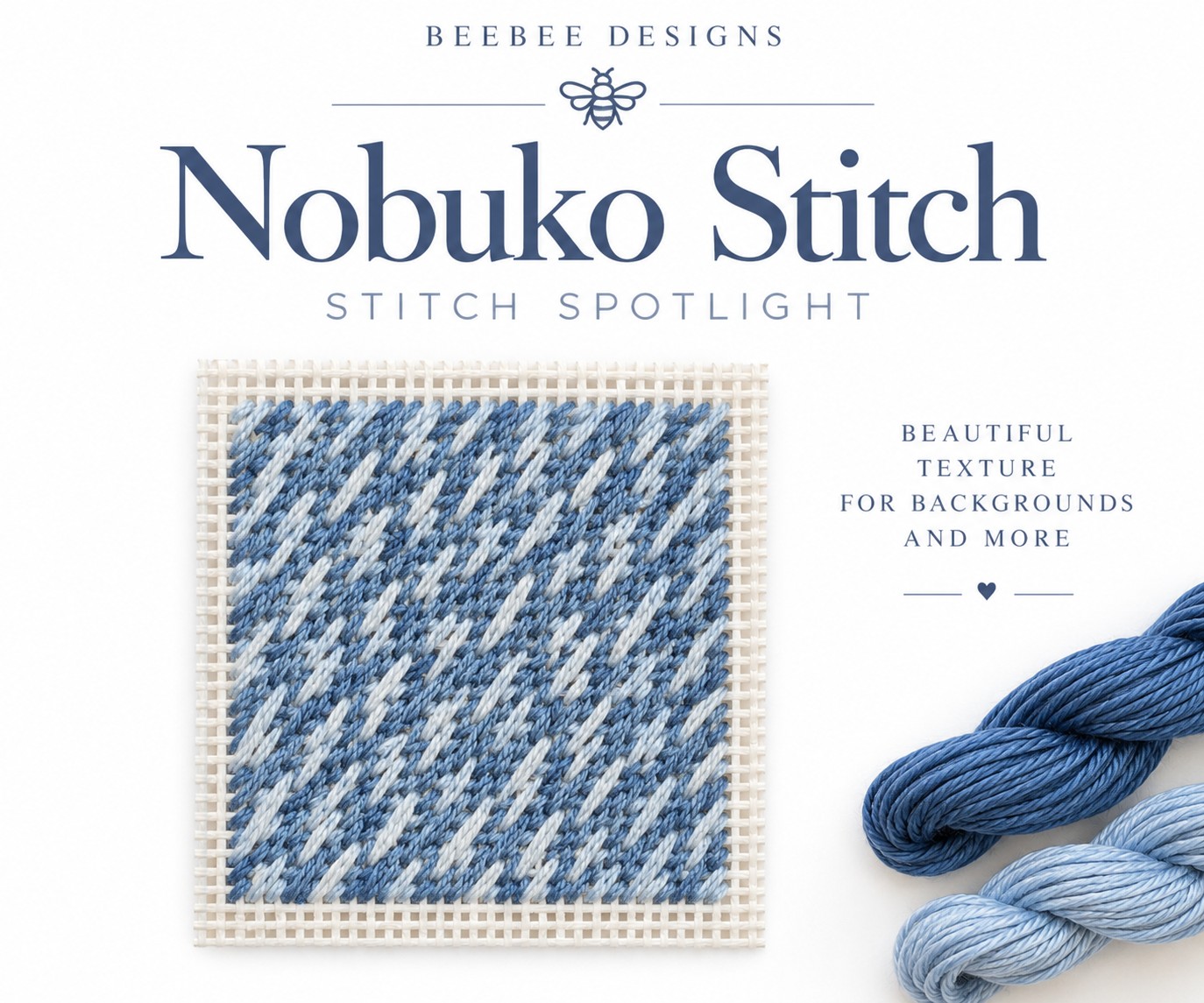
There’s something quietly luxurious about the Diagonal Mosaic Stitch.
It has movement. Rhythm. A soft architectural texture that feels polished without becoming too busy.

For needlepoint lovers who want to move beyond basketweave but still keep a clean, elegant finish, this stitch is a beautiful next step.

The diagonal mosaic stitch creates tiny woven blocks that travel gently across the canvas in a diagonal flow. The result feels refined, dimensional, and incredibly satisfying to stitch.

Perfect for:

  • skies
  • water
  • rooftops
  • ornaments
  • backgrounds
  • coastal canvases
  • chinoiserie details
  • grandmillennial florals

Basically? It’s the “quiet luxury” stitch of needlepoint.

What Is the Diagonal Mosaic Stitch?

The diagonal mosaic stitch is made using small groups of stitches worked in a repeating diagonal pattern.

Typically, each unit contains:

  • one short stitch
  • one longer center stitch
  • another short stitch

These grouped stitches step across the canvas diagonally, creating a soft tiled effect with wonderful texture and movement.

Unlike some highly textured stitches that can overpower a design, diagonal mosaic adds interest while still allowing your artwork to shine.

It’s subtle. Sophisticated. Very BeeBee.

Why Stitchers Love It

1. Beautiful Texture

The stitch catches light beautifully and gives your canvas a softly raised appearance.

2. Great Coverage

It provides excellent thread coverage on painted canvas, especially on 13 and 14 mesh.

3. Faster Than Tent Stitch

Because the stitch spans multiple intersections, areas fill more quickly than basketweave or continental.

4. Perfect for Backgrounds

The repeating pattern creates visual movement without competing with focal elements.

881fc6cc 3a00 4e21 9734 69ffc4be7f1b

Best Places to Use Diagonal Mosaic

The diagonal mosaic stitch works especially well in:

  • ocean backgrounds
  • grassy areas
  • skies
  • pumpkins
  • Christmas ornaments
  • architectural walls
  • flower boxes
  • coastal landscapes
  • animal fur accents
  • decorative borders

For coastal needlepoint designs, this stitch can create the prettiest shimmering water effect.

Thread Suggestions

At BeeBee Designs, we especially love:

  • Planet Earth Fiber for soft coverage and rich color
  • Pepper Pot for elegant sheen and crisp stitch definition

On 14 mesh canvas:

  • silk blends beautifully
  • stranded silk gives lovely detail
  • wool creates cozy texture

For beginners, softer threads are usually easier to tension consistently.

Beginner Tip

Start with:

  • one small section
  • lighter thread colors
  • a simple background area

The rhythm becomes very relaxing once your eye understands the pattern.

And don’t worry if the first few rows feel awkward — suddenly your hands “get it,” and then it becomes oddly addictive.

Needlepointers know the feeling.

BeeBee Tip ✨

The diagonal mosaic stitch looks especially stunning when paired with:

  • coastal blues
  • soft sage greens
  • Nantucket grays
  • chinoiserie pinks
  • warm pumpkin tones

It photographs beautifully too, which makes it wonderful for ornaments, acrylic finishes, and heirloom-style decorative pieces.

Final Thoughts

One of the loveliest things about needlepoint is how stitches can completely transform a design.

The diagonal mosaic stitch adds depth, elegance, and movement while still letting the artwork remain the star of the canvas.

It’s timeless. Relaxing. Beautifully textured.

And once you start using it, you may suddenly find yourself wanting diagonal mosaic backgrounds on everything.


Categories: Needlepoint Stitches

The Quiet Healing of Needlepoint: Why Stitching Feels Like Therapy for the Soul

chatgpt image may 6, 2026, 02 01 52 pm

There’s something almost magical about the rhythm of needlepoint.

The soft pull of thread through canvas.
The quiet counting of stitches.
The gentle pause from screens, noise, and endless notifications demanding our attention.

In a world that constantly tells us to hurry, needlepoint whispers something different:

Slow down. Breathe. Create something beautiful one stitch at a time.

For many stitchers, needlepoint is far more than a hobby. It becomes a form of mental wellness — a peaceful ritual that helps calm anxiety, ease stress, and reconnect us with ourselves in a deeply grounding way.


Why Needlepoint Helps Mental Wellness

1. Needlepoint Creates Calm in a Chaotic World

Our brains are overwhelmed daily with information, scrolling, alerts, and pressure to constantly “do more.” Needlepoint offers something rare: focused stillness.

When stitching, your mind naturally settles into the repetitive motion of stitching and counting. This repetitive movement can create a meditative effect similar to mindfulness practices.

Instead of racing thoughts, your attention gently centers on color, texture, and rhythm.

It’s difficult to doom-scroll while holding a tapestry needle. Honestly? Tiny stitches may be the original anti-anxiety app.


2. Stitching Reduces Stress and Anxiety

Many stitchers describe needlepoint as their “peaceful escape.”

After a long day, sitting down with a canvas and thread can help lower tension and quiet mental clutter. The act of creating something with your hands encourages the nervous system to slow down.

Needlepoint can help:

  • Reduce feelings of overwhelm
  • Encourage relaxation
  • Improve focus
  • Promote emotional balance
  • Create healthy screen-free time

Even 20 minutes of stitching can feel like a reset button for the mind.


3. Creativity Supports Emotional Health

Creative hobbies are deeply connected to emotional wellness.

Needlepoint allows you to express yourself through:

  • Color choices
  • Decorative stitches
  • Finishing styles
  • Seasonal themes
  • Personalized designs

There is joy in making something beautiful purely because it brings happiness.

Not everything needs to be productive in the traditional sense. Sometimes creating art simply for comfort is enough.

And honestly? A cozy chair, good lighting, beautiful fibers, and a canvas waiting beside you feels a little like emotional support… but make it grandmillennial.


4. Needlepoint Encourages Mindfulness

Mindfulness means staying present in the moment instead of worrying about the future or replaying the past.

Needlepoint naturally encourages this.

You focus on:

  • The texture of fibers
  • The placement of stitches
  • The flow of color
  • The gradual progress of the piece

One stitch at a time becomes a gentle reminder that progress does not need to happen all at once.

That lesson applies beautifully to life too.


5. Finishing a Piece Builds Confidence

There’s something deeply satisfying about completing a needlepoint project.

In a fast-paced digital world where so much feels temporary, needlepoint gives you something tangible:

  • A finished ornament
  • A beautiful pillow
  • A framed keepsake
  • A hand-stitched heirloom

Completing a project creates a sense of accomplishment and pride. Even small finishes can boost confidence and provide emotional encouragement during difficult seasons.

Tiny stitches. Big emotional support.


Needlepoint and Connection

Needlepoint also creates community.

Whether through local stitch groups, online communities, retreats, or sharing projects on social media, stitching connects people across generations and backgrounds.

There’s comfort in knowing others understand the joy of choosing threads, starting a new canvas, or celebrating that final stitch.

In many ways, needlepoint reminds us we are never stitching alone.


Creating a Cozy Needlepoint Wellness Routine

Want to turn stitching into a calming self-care ritual? Try creating a cozy stitching space with:

  • Comfortable seating
  • Warm lighting
  • A project basket nearby
  • Soft music or an audiobook
  • Your favorite tea or coffee
  • A screen-free hour in the evening

Needlepoint doesn’t ask for perfection. It simply asks you to slow down and enjoy the process.


Final Thoughts

Needlepoint is more than thread on canvas.

It is quiet therapy.
Creative rest.
Mindful beauty.
A soft place to land after hard days.

In every stitch, there is patience.
In every finished piece, there is comfort.
And in the gentle rhythm of stitching, we often rediscover peace we didn’t realize we needed.

So tonight, pick up the canvas.
Thread the needle.
And let your mind rest, one beautiful stitch at a time.

How to Use Variegated Threads in Needlepoint

chatgpt image apr 27, 2026, 08 39 04 am

There’s something a little magical about variegated threads—like painting with light instead of color. Soft shifts, unexpected depth, that “wait… did I plan that?” kind of beauty.

But here’s the truth no one says loud enough:
they can either elevate your canvas… or completely overwhelm it.

Let’s make sure you land on the elevated side.


Less Really Is More

Variegated threads are the statement jewelry of needlepoint.

You don’t wear five statement necklaces at once—same energy here.

Using too many variegated threads in one design can make everything feel busy and unfocused. Instead, let them breathe. Let them have their moment.


Pick 1–2 areas max where you want that soft color movement. Let the rest of your canvas stay clean and supportive.


Let Them Flow Where Nature Flows

Variegated threads shine when they mimic natural variation.

Think:

  • Sky with soft color shifts
  • Ocean waves 🌊
  • Grass, leaves, florals
  • Sand, stone, wood textures
  • Fur or cozy textiles

Anywhere you’d expect subtle color change in real life—that’s your sweet spot.

They create dimension without you having to overthink shading. It’s like the thread does the work for you.


Choose a Focal Moment

Instead of scattering variegated threads everywhere, give them purpose.

Ask yourself:
👉 Where do I want the eye to land first?

Then use variegated thread there—and maybe echo it lightly in one or two other spots for balance.

This creates a rhythm across your piece instead of visual noise.


Stitch Direction Matters

Here’s where things get a little sneaky…

The way you stitch changes how the colors appear.

  • Basketweave / Tent Stitch: smoother, blended color transitions
  • Long stitches (like Gobelin or Satin): more dramatic color pooling
  • Changing direction: can break up or intensify color shifts


If you want a soft, blended look → stay consistent in stitch direction.
If you want bold variation → let the thread do its thing with longer stitches.

Don’t Fight the Thread

Variegated threads are not here to be controlled. They are here to collaborate.

If you try to force perfect color placement, you’ll lose that organic beauty.

Instead:

  • Stitch in the order it comes off the skein
  • Avoid constantly cutting and restarting
  • Trust the flow (seriously)

That slightly unpredictable look? That’s the charm.

Match the Fiber to the Vibe

Variegated threads come in different fibers—and it matters.

  • Silk (like Pepper Pot): soft, luminous, elegant
  • Wool: cozy, matte, traditional
  • Cotton: crisp and defined

For your BeeBee aesthetic—preppy, coastal, chinoiserie—
silk variegation is chef’s kiss for that polished finish.


A Final Thought

Variegated threads aren’t about perfection.
They’re about movement, softness, and that little spark of surprise.

Use them thoughtfully, and your canvas will feel alive.

Overuse them… and it’s giving chaos energy

screenshot 2026 04 27 083935
screenshot 2026 04 27 084045

Categories: Needlepoint Stitches

Stretcher Bars or Not ?

chatgpt image mar 27, 2026, 11 55 20 am

What to Do With an 8-Inch Needlepoint Canvas

There’s a moment every stitcher faces:
You have a fresh canvas in your hands… threads picked out… needle ready…

And then the question hits:

“Do I need stretcher bars for this?”

Let’s talk about it..


✨ First Things First: What Are Stretcher Bars?

https://poppymonkneedlepointkits.com/cdn/shop/articles/Needlepoint_stretcher_bars_do_i_need_them.jpg?v=1726083348
https://stitchsocietyokc.com/cdn/shop/articles/Stitch.Society-06.jpg?v=1742569671
https://m.media-amazon.com/images/I/81ycEAD3PNL._AC_UF350%2C350_QL80_.jpg

4

Stretcher bars are wooden frames that hold your canvas taut while you stitch.
They’re not fancy… but they do make a difference.

Think of them as your canvas’ posture coach—keeping everything straight, smooth, and behaving properly.


🪡 For an 8-Inch Canvas… Do You Need Them?

Short answer?
No. But also… kind of yes (depending on you).

Let’s break it down:

✔️ Skip Stretcher Bars If You:

  • Are working basketweave consistently (your tension is naturally balanced)
  • Don’t mind holding the canvas in hand
  • Want a quick, cozy, portable project
  • Are stitching something simple (like a small ornament or beginner piece)

👉 Plenty of beautiful pieces are stitched in hand. Truly.


✔️ Use Stretcher Bars If You:

  • Want crisp, straight edges (especially for finishing like ornaments or inserts)
  • Are using decorative stitches (these pull the canvas more)
  • Tend to stitch tightly (most of us do 👀)
  • Hate when your canvas starts looking a little… wavy

👉 For an 8-inch canvas, stretcher bars give you that clean, polished finish.


💡 The Truth Nobody Tells You

Your canvas will distort a little without stretcher bars.
Even experienced stitchers deal with this.

Now—can it be fixed during blocking?
Yes.

But here’s the real tea:
👉 Blocking fixes… but stretcher bars prevent.

And prevention is just easier.


🧶 What Size Stretcher Bars for an 8-Inch Canvas?

https://m.media-amazon.com/images/I/71ksN7XY0PL._AC_UF894%2C1000_QL80_.jpg
https://www.unwind.studio/cdn/shop/files/Tacks_Frames_UnwindStudio_1.jpg?v=1691076991&width=600
https://m.media-amazon.com/images/I/81EUADF--eL._AC_UF894%2C1000_QL80_.jpg

4

You’ll want:

  • 8-inch bars (to match your design area), OR
  • Slightly larger (like 9–10 inch) if you want extra margin

Attach your canvas with:

  • Brass tacks or stainless steel tacks
  • Even spacing (about every 1–2 inches)

Pull it snug—but not drum-tight like a trampoline 😄


🌿 BeeBee Tip (You’ll Thank Yourself Later)

If you’re stitching:

  • A gift
  • A keepsake
  • Or anything going to a finisher

👉 Use stretcher bars.

That clean shape makes finishing smoother, faster, and prettier.
No fighting warped edges or uneven sides.


🧵 But Let’s Keep It Real…

Needlepoint is supposed to feel good.

If stretcher bars:

  • Annoy you
  • Slow you down
  • Or take away that cozy, curl-up-on-the-couch vibe

Then skip them.

There’s no needlepoint police coming for you.


✨ Final Thoughts

An 8-inch canvas sits right in the middle—it’s the “you could go either way” size.

  • Want ease + comfort? → Stitch in hand
  • Want precision + polish? → Use stretcher bars

Both roads lead to something beautiful.

And at the end of the day?
The magic isn’t in the frame…

It’s in the hands holding the needle


Amazon
  • PREMIUM HARDWOOD CONSTRUCTION: Made by premium pine wood, our bars resist warping, bending, or splintering over time—ensuring your needlework stays taut and pristine for years.
  • TOOL-FREE ASSEMBLY: Interlocking corners snap together instantly—no tools needed! select the 5 size bars to fit your canvas/needlepoint art size, then tighten with gripper pins for perfect fabric tension.
  • FABRIC-SAFE EDGES & SEAMLESS NAIL HANGING ON: Smooth, rounded edges prevent snags and protect delicate embroidery fabrics. Hold canvas securely without damaging threads or stitches. And provide Seamless nails to hang on your masterpiece as wall decor
  • VERSATILE SIZE RANGE FOR ALL PROJECTS: Pairs available from 2-inch mini bars to 24-inch lengths with 2 options( standard size Standard Size 6", 8", 10", 12", 14" by 3/4-Inch + Oversize 16", 18", 20", 22", 24" by 3/4-Inch ) —ideal for needlepoint, cross-stitch, punch needle, and framed textile art."
  • WHAT INCLUDED BY ECOIOU STRETCHER BARS: Pack includes 20 stretcher bars, 100pcs Flat-head thumbtacks, 10pcs pack Seamless nails and Hanging nails, each 4pcs of Size 16", 18", 20", 22", 24" by 3/4-Inch. Simply slide the notched ends into each other to form a square or rectangle. Push firmly until they lock into place.


We earn a commission if you make a purchase, at no additional cost to you.

The Thing No One Tells You About Needlepoint

chatgpt image mar 19, 2026, 09 26 06 am
chatgpt image mar 19, 2026, 09 26 09 am

Let’s talk about something no one really says out loud when you first fall in love with needlepoint…

Start small. Like… really small.

I know, I know. You have a vision.
A darling Christmas stocking for a new grandbaby…
A gorgeous, oversized canvas that would make the most fabulous pillow on your bed…

And listen — I would never tell you not to dream big. That’s where the magic lives.

But I am going to gently guide you toward something that will actually help you get there.

Because here’s what I’ve seen, time and time again…

A brand-new stitcher falls head over heels for a large, intricate project. The colors, the details, the possibilities — it’s irresistible.

And then… a few months go by.

The canvas sits.
The excitement fades.
And suddenly, something that once felt joyful starts to feel a little overwhelming.

Not because you’re not talented. Not even close.

But because needlepoint is slow.
Beautifully, intentionally, quietly slow…
…and no one really prepares you for that part.

So here’s my honest, from-the-heart advice:

Start with something small.

An ornament is perfect. A sweet little 4×4 that you can actually finish in a reasonable amount of time. Choose a design with fewer color changes. Let it feel easy. Let it feel fun.

Give yourself the gift of finishing.

Because that moment — when you hold something in your hands that you stitched, start to finish — is everything.

That’s the spark. That’s what makes you want to do it again.

Do that a couple of times. Build that rhythm. Build that confidence.

And then?

Go after that dream project.

You’ll not only finish it…
you’ll enjoy every stitch along the way.

Happy Stitching

8 Secrets to Smooth Needlepoint Stitches (Beginner to Expert Guide)

chatgpt image mar 9, 2026, 12 24 57 pm

There’s something magical about a perfectly stitched needlepoint canvas. The threads lie smoothly across the canvas, the stitches look crisp and even, and the finished piece has that polished, heirloom quality we all love.

If your stitches sometimes look twisted, bumpy, or uneven, don’t worry. Even experienced stitchers occasionally battle rough-looking stitches. The good news? A few simple techniques can completely transform the look of your needlepoint.

Here are the secrets to creating the smoothest stitches possible.


1. Let Your Thread Untwist

One of the biggest reasons stitches look rough is twisted thread.

As you stitch, your thread naturally twists tighter and tighter. When that happens, it stops lying flat on the canvas.

Every few stitches:

• Drop your needle
• Let it dangle freely
• Allow the thread to unwind

You’ll often see it spin on its own. Once the twist relaxes, your stitches will immediately look smoother.


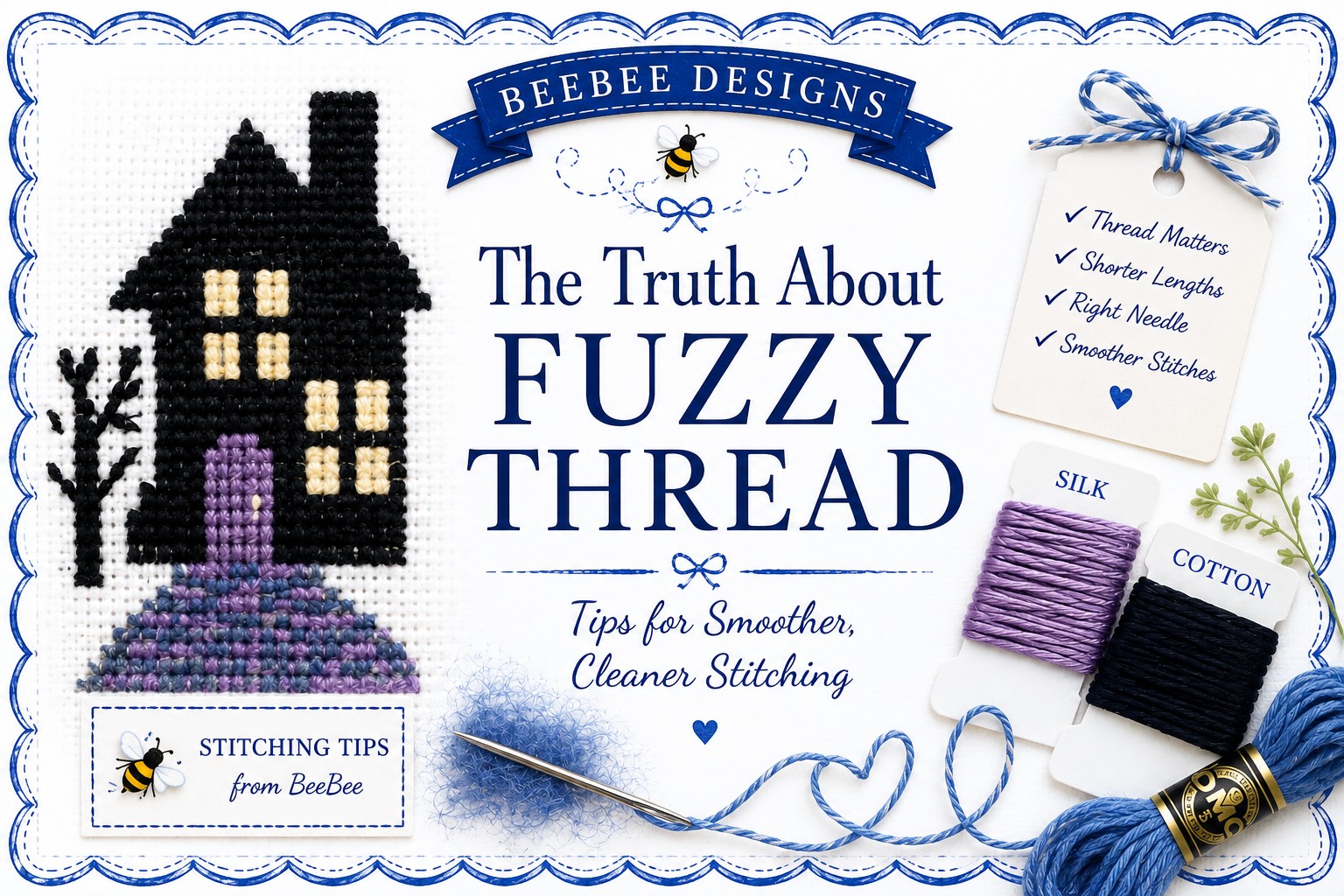
2. Use Shorter Thread Lengths

Long threads may seem efficient, but they actually cause more friction and twisting.

For smoother stitches, cut thread about 12–18 inches long.

Shorter lengths:
• Reduce wear on the fiber
• Prevent fuzziness
• Lay more smoothly on the canvas

Think of it as stitching with fresh thread more often.


3. Railroading Your Stitches

“Railroading” is a secret many needlepoint professionals use.

After bringing your needle up through the canvas, gently separate the strands of thread with the needle before going down into the next hole.

This helps the strands lie side-by-side instead of twisting over each other, creating a flatter stitch.


4. Use a Laying Tool

If you want truly luxurious stitches, a laying tool is a game changer.

A laying tool helps guide the thread so it lays perfectly flat across the canvas.

Many stitchers love:

• Trolley needles
• Tekobari laying tools
• Even a large tapestry needle used as a guide

Simply hold the thread lightly with the tool as you pull your stitch through the canvas.


5. Maintain Consistent Tension

Pulling stitches too tightly can distort the canvas and make threads sink unevenly.

Instead, aim for gentle, consistent tension.

Your stitches should sit comfortably on top of the canvas without pulling the mesh out of shape.

A good test: the thread should rest softly across the canvas, not look pinched.


6. Use the Basketweave Stitch

For large background areas, the basketweave stitch creates the most even tension and smooth appearance.

Unlike tent stitch worked in rows, basketweave:

• Prevents canvas distortion
• Creates more uniform stitches
• Produces a beautifully textured finish

It’s a favorite among professional stitchers for good reason.


7. Choose the Right Fiber

Some threads naturally stitch smoother than others.

Excellent choices for smooth stitching include:

• Pepper Pot Silk
• Planet Earth Silk
• DMC Cotton Perle
• Milan Wool

High-quality fibers glide across the canvas and resist fuzzing.


8. Good Lighting Makes a Difference

Smooth stitching is much easier when you can clearly see the canvas.

Use:

• Bright natural light
• A daylight crafting lamp
• Magnification if needed

Seeing each hole clearly helps your stitches land perfectly every time.


The Beauty of Slow Stitching

Needlepoint isn’t about speed — it’s about the quiet joy of creating something beautiful stitch by stitch.

When you slow down, allow your threads to relax, and guide them gently across the canvas, the results are stunning.

Smooth stitches turn a simple canvas into a work of art.

And that’s the magic of needlepoint.


Happy stitching,

BeeBee Designs
Classic Needlepoint with a Preppy Coastal Touch

Needlepoint Laying Tool

Laying Tool for Needlepoint, Embroidery Aid, Multifunctional Precision Thread Guide Sewing Guide for Cross Stitch Art Crafts, Padauk Wooden Crafting Aid for Beginners Professionals

Brand: Badiman

We earn a commission if you make a purchase, at no additional cost to you.

How to Frame a Needlepoint Under Glass (The Right Way)

chatgpt image feb 26, 2026, 08 44 21 am

Framing your finished needlepoint is one of the most rewarding steps in the entire stitching journey. Whether it’s a 4×4 coastal ornament, a Nantucket-style eyeglass case insert, or a statement pillow front you want preserved forever — proper framing protects your work and turns it into art.

But framing under glass must be done correctly.

Let’s walk through it the BeeBee way.


Step 1: Block Your Needlepoint First

Before anything touches a frame, your piece must be properly blocked.

Needlepoint can shift while stitching — especially on 13 or 14 mesh — and blocking ensures your design is perfectly square and crisp. A professional finisher can do this, or you can lightly dampen and pin it to blocking boards yourself.

Never frame a warped canvas. Ever.


Step 2: Use Spacers (This Is Critical)

If you remember one thing from this post, let it be this:

Your needlepoint should NEVER touch the glass.

When fabric rests directly against glass, condensation can form — even in climate-controlled homes. Over time, this trapped moisture can cause:

  • Mildew
  • Yellowing threads
  • Fiber breakdown
  • Permanent staining

Spacers create a small air gap between the needlepoint and the glass. They are usually thin strips hidden inside the frame under the mat. Some framers automatically include them — some do not.

Always ask.

This small detail protects your piece for decades.


Step 3: Choose the Right Glass

Not all glass is created equal.

For heirloom pieces, consider:

  • UV-protective glass (prevents fading)
  • Museum glass (low glare + UV protection)
  • Conservation glass (filters light damage)

If your needlepoint includes silk threads, specialty fibers, or hand-painted details, UV protection is especially important.

Sunlight is beautiful. It is also ruthless.


Step 4: Protect Against Dampness & Mildew

Humidity is the quiet villain of textile art.

Needlepoint is made from natural fibers — cotton, wool, silk — which absorb moisture. In high humidity environments, this can lead to mildew growth.

To prevent issues:

  • Avoid hanging framed needlepoint in bathrooms.
  • Avoid kitchens where steam builds.
  • Keep away from exterior walls prone to condensation.
  • Use silica packets behind the backing (optional but helpful in humid climates).
  • Maintain stable indoor humidity (around 40–50%).

If you live in coastal or humid areas, this is especially important.

Moisture damage is preventable. Once mildew sets in, it’s heartbreaking.


Step 5: Proper Backing & Sealing

The back of your framed needlepoint matters too.

Use acid-free backing materials and dust covers. This prevents:

  • Insect intrusion
  • Dust buildup
  • Acid transfer from cardboard

A properly sealed frame keeps your piece clean and stable long term.


How to Store Needlepoint (Framed or Unframed)

Sometimes you rotate decor seasonally. Or maybe you’ve stitched faster than you can frame (we’ve all been there 😉).

Here’s how to store safely:

For Unframed Needlepoint:

  • Store flat, not folded.
  • Use acid-free tissue between layers.
  • Keep in breathable cotton bags (not plastic).
  • Avoid attics and basements.
  • Add cedar blocks for pest protection (never directly touching fibers).

For Framed Needlepoint:

  • Store upright, not stacked flat.
  • Keep in climate-controlled spaces.
  • Avoid garages.
  • Wrap loosely in cotton or muslin (not bubble wrap directly against frame long-term).

Textiles need airflow. Plastic traps moisture.


Final Thoughts from BeeBee Designs

Your needlepoint isn’t just decor.

It’s hours of stitching.
It’s quiet mornings.
It’s thread pulled through canvas one stitch at a time.

Framing it correctly ensures your work lasts for generations.

Take the extra step. Ask for spacers. Protect against moisture. Use conservation materials.

Because beautiful things deserve to stay beautiful.

Amazon

Mat Board Center, Pack of 10 Acid-Free Foam Boards, 11x14 inch White Foam Boards, 1/8" Thick


We earn a commission if you make a purchase, at no additional cost to you.

Digitally Printed vs. Stitch-Painted Needlepoint Canvases

chatgpt image feb 16, 2026, 03 50 31 pm

What’s the Difference — and Why Does It Matter?

If you’ve ever shopped for needlepoint canvases, you’ve probably seen two terms used often: digitally printed and stitch-painted. At first glance they may look similar, but the production process, stitching experience, and pricing are very different.

Let’s unpack it.


🖥️ Digitally Printed Needlepoint Canvases

https://cdn.shopify.com/s/files/1/0270/2547/3618/files/needlepoint_canvas_color_intersections.jpg?v=1694444312
https://needlepoint.com/cdn/shop/products/three-sisters-pillow-18-mesh-printed-canvas-needlepoint-to-go-881143.jpg?v=1657836329

A digitally printed canvas is created using a printer that transfers the design directly onto blank needlepoint mesh using ink.

How It’s Made:
  1. The designer creates the artwork digitally (often in specialized software).
  2. The design is sized to match the mesh count (13, 14, 18, etc.).
  3. The file is sent to a professional printer.
  4. The design is printed directly onto the canvas mesh.
What You’ll Notice:
  • Colors may appear slightly blended.
  • The ink may not perfectly align to each individual stitch intersection.
  • The back of the canvas often shows visible ink transfer.
  • Sometimes symbols or shading are more “pixelated” or soft-edged.
Benefits:
  • More affordable
  • Faster production
  • Easier for complex shading and gradients
  • Great for beginners or larger projects

Digital printing allows designers to produce canvases efficiently and at scale, which keeps prices lower.


🎨 Stitch-Painted Needlepoint Canvases
https://rittenhouseneedlepoint.com/cdn/shop/files/CharleyHarperCardinalCloseUpOrnamentNeedlepointCanvas.jpg?v=1712104072
https://needlepointus.com/prodimages/18-161xl.jpg

A stitch-painted canvas is painted by hand, one stitch intersection at a time, to match the stitch grid precisely.

How It’s Made:
  1. The design is charted first — just like a counted cross stitch pattern.
  2. Each square on the chart corresponds to one stitch intersection.
  3. A skilled painter paints each stitch individually on the mesh.
  4. The painter carefully follows the chart to ensure exact placement.

There is no “freehand” painting here — it is methodical and technical.

What You’ll Notice:
  • Each stitch square is clearly defined.
  • No guessing where a stitch begins or ends.
  • Clean color blocking.
  • A very crisp stitching experience.

Why Is Hand / Stitch-Painted More Expensive?

Because it is labor-intensive craftsmanship.

Let’s be real — painting 3,000 to 10,000 tiny stitch intersections by hand takes time. A 4×4 inch canvas on 14 mesh contains:

56 stitches across × 56 stitches down = 3,136 stitches

That means over 3,000 individual paint placements — by hand.

Now imagine a 5×7 or larger piece.

You are paying for:

  • Skilled labor
  • Time (often hours per canvas)
  • Precision accuracy
  • Higher paint costs
  • Smaller production runs

It’s not mass production — it’s artisan work.


How Both Types Are Worked From a Chart

Here’s something many stitchers don’t realize:

Both digitally printed and stitch-painted canvases begin the same way — from a chart.

A chart is a gridded design where:

  • Each square equals one stitch.
  • Each color is assigned to a square.
  • The chart controls placement and color transitions.

For digitally printed canvases:

  • The chart file is sent to a printer.
  • The printer applies ink based on pixel mapping.

For stitch-painted canvases:

  • The painter manually follows that same chart.
  • Each stitch square is painted individually.

So the artistic planning stage is identical.
The difference is in how the design gets onto the mesh.


So Which Should You Choose?

It depends on what you value.

Choose digitally printed if you:

  • Want a more affordable option
  • Enjoy shading and painterly effects
  • Are stitching for fun or learning

Choose stitch-painted if you:

  • Want absolute stitch clarity
  • Prefer crisp intersections
  • Appreciate artisan craftsmanship
  • Don’t want to guess color placement

Neither is “wrong.” They simply serve different needs and price points.


Final Thoughts

Needlepoint is already a labor of love. Whether the canvas is digitally printed or stitch-painted, the real magic happens when thread meets mesh.

But understanding the difference helps you appreciate why prices vary — and why hand-painted canvases are considered heirloom-quality investments.

And honestly? Once you’ve stitched a perfectly painted stitch-painted canvas… it’s hard to go back.

The Best Threads for 13 Count vs 18 Count Needlepoint Canvas

chatgpt image feb 14, 2026, 04 21 16 pm

Choosing the right thread for your mesh count is everything. Too thick? Your stitches look bulky and crowded. Too thin? You’ll see canvas peeking through — and nobody wants that.

Let’s break it down clearly so your stitches look smooth, full, and professional.


🧵 Best Threads for 13 Count Mesh

https://www.kcneedlepoint.com/cdn/shop/files/IMG_2955.jpg?v=1746582281&width=1080
https://www.stitchingfox.com/cdn/shop/files/Vineyard-Silk-Classic-001-090_2_1200x1200.jpg?v=1684435777

13 count mesh has larger holes, which means it needs a heavier thread to properly cover the canvas.

Top Thread Choices for 13 Count:

  • Planet Earth Silk
  • Pepper Pot Silk
  • Vineyard Silk Classic
  • Wool (Persian wool, crewel wool)

These threads are thick enough to give you beautiful, solid coverage without doubling strands.

Why These Work:

  • They fill the larger intersections cleanly.
  • They give a soft, plush finish.
  • They’re forgiving for beginners.
  • Coverage is typically perfect with one strand.

If your canvas is 13 mesh and you’re seeing canvas through your stitches, your thread is probably too thin.


🧵 Best Threads for 18 Count Mesh

https://needlepointjoint.com/cdn/shop/products/Silk_Ivory_91-100.JPG?v=1643053596
https://m.media-amazon.com/images/I/91PBXInbcHL.jpg
https://www.kcneedlepoint.com/cdn/shop/files/11_c98328a3-0a19-4eb0-b20a-430fa773b709.png?v=1769295966&width=1920

18 count mesh has smaller holes, so you need a finer thread for smooth coverage.

Top Thread Choices for 18 Count:

  • Silk & Ivory
  • DMC Cotton Floss (2–3 strands)
  • Neon Rays
  • Vineyard Silk Shimmer
  • Smaller weight silks

Why These Work:

  • They glide easily through tighter mesh.
  • They don’t bulk up intersections.
  • They create crisp, refined detail.
  • They allow for more stitch texture variety.

On 18 mesh, bulky thread will make your canvas stiff and distorted. Finer thread keeps everything elegant and balanced.


Quick Comparison Guide

Mesh CountHole SizeThread WeightLook
13 CountLargerHeavier silk or woolPlush, bold
18 CountSmallerFiner silk, cotton, specialtyDetailed, refined

Pro Tip for Perfect Coverage

Coverage isn’t just about thread weight — it also depends on:

  • Stitch type (Basketweave covers more fully than Continental)
  • Stitch tension
  • Fiber content (silk lays flatter than cotton)

When in doubt, stitch a small test area first. Your eyes will tell you immediately if the coverage feels right.


If you’re designing your own canvases (which I know many of you are 😉), choose your mesh count based on the final look you want:

  • 13 mesh → Bold, classic, traditional needlepoint feel
  • 18 mesh → Refined, detailed, heirloom finish

Both are beautiful. It’s just about intention.

Silk Thread

 Suitable for hand embroidery, cross-stitch, DIY crafts, making beautiful decorations for your bedroom/wall/home, you can also use them to make gifts for your lover, weave friendship bracelets for your intimate friends or decorate your braids and so on

We earn a commission if you make a purchase, at no additional cost to you.

Why You Should Always Leave 3–4 Extra Rows When Stitching Needlepoint Designs

chatgpt image feb 13, 2026, 09 43 43 pm

When stitching a needlepoint canvas, one of the most important — and often overlooked — best practices is leaving extra rows of blank stitches around your design. Professional needlepoint finishers strongly recommend allowing at least 1 and half to 2 inches canvas beyond the stitched design area. It also helps to stitch a couple of rows of same color around the borders of the stitched design.. These additional rows provide the necessary working margin finishers need to properly sew, mount, and shape your project into its final form. Whether your project is becoming an ornament, pillow, acrylic insert, door hanger, or coaster, this small detail plays a major role in the final quality of your piece.

Needlepoint finishing requires secure stitching and precise construction. Finishers use the extra canvas edge to sew seams, attach backing materials, and create clean edges without disturbing your decorative stitching. If a design is stitched too close to the edge of the canvas, finishers may be forced to sew through or directly beside decorative stitches. This can cause distortion, thread damage, or uneven shaping. Leaving a buffer zone keeps finishing tension on blank canvas instead of pulling against stitched areas, which helps preserve stitch definition and keeps your finished needlepoint looking crisp and professional.

For needlepoint designers, stitchers, and anyone creating canvases for sale, planning for finishing margins should be part of the design process from the very beginning. When charting digital patterns, painting canvases, or calculating stitch counts, always include this finishing allowance in your total canvas size. Not only does this make finishing easier and safer, but it also increases customer satisfaction and reduces finishing complications. Taking this extra step ensures your needlepoint project transitions smoothly from stitching frame to beautifully finished heirloom-quality piece.


Quick Needlepoint Finishing Margin Tip

Stitch a couple of rows beyond the border of stitched design in same same .

Leave 1.5 to 2 inch minimum of blank canvas around your stitched design
More may be needed for larger or specialty finishing projects
Always confirm with your finisher if unsure

“Before sending your canvas to the finisher, block it using stainless steel T-pins.

To keep edges square and ensure those extra rows stay even, a blocking board makes a big difference.

A good pair of sharp embroidery scissors makes trimming excess canvas clean and precise before finishing

Amazon

Extra Thick Blocking Mats for Wet and Steam Blocking - Includes Pack of 9, 100 T Pins, 10 Pin Blocker and Storage Bag


We earn a commission if you make a purchase, at no additional cost to you.

The Corduroy Stitch: Perfect Texture for Needlepoint Brick & Stone Walls

chatgpt image feb 11, 2026, 01 09 38 pm

If you love stitching architecture of little beach cottages, Nantucket houses, storefronts, lighthouses, or cozy cottages — the corduroy stitch is one of those underrated stitches that can seriously level up your texture game.

It gives you that subtle raised rib look that reads beautifully as:

  • Brick
  • Stone
  • Clapboard siding
  • Painted wood
  • Even chimney texture

And the best part? It’s way easier than it looks.


What Is the Corduroy Stitch?
https://cdn.shopify.com/s/files/1/0270/2547/3618/files/needlepoint_corduroy_stitch_tutorial_and_diagram.jpg?v=1713284611
https://www.kcneedlepoint.com/cdn/shop/articles/Tiny_Stitches_Upright_Cross_Stitch-31.png?v=1624642714&width=1080
https://cdn.shopify.com/s/files/1/0270/2547/3618/files/Corduroy_2.jpg?v=1740413299

4

The corduroy stitch is a layered straight stitch technique that creates vertical or horizontal ribs — just like corduroy fabric.

Instead of flat coverage like basketweave, you get:
✨ Dimension
✨ Light shadow play
✨ Architectural realism

It’s especially pretty on house canvases where you want the wall to feel alive, not flat.


Why It Works So Well for Bricks & Walls

Use corduroy horizontally → reads like rows of brick courses.
Add slight color shifts → instant aged brick look

Use corduroy vertically → perfect clapboard illusion.
Great for:

  • Coastal cottages
  • Preppy storefronts
  • Painted wood home

Use uneven color blends → gives natural stone depth.


Where To Use It On House Canvases

Try corduroy stitch on:

  • Exterior house walls
  • Chimneys
  • Foundation stone
  • Garden walls
  • Brick storefronts
  • Coastal shingle homes (looser version)

Thread Tips (From a Designer Perspective)

For crisp ribs:
✔ Use stranded cotton or silk (Pepper Pot is gorgeous here)
✔ Avoid super fuzzy fibers
✔ Slight overdye variation = chef’s kiss for brick

For softer painted house look:
✔ Silk + Ivory blends
✔ Matte cottons
✔ Slightly lighter background color behind ribs


Beginner-Friendly? Yes (With One Trick)

The key:
👉 Keep stitch length consistent
👉 Work in rows
👉 Don’t pull too tight (you’ll lose rib dimension)

Once you get the rhythm, it’s honestly relaxing — very “zone out and stitch your tiny dream beach house” energy.


The Continental Stitch: A Needlepoint Essential Every Stitcher Should Know

chatgpt image jan 25, 2026, 05 28 37 pm

Once you’ve mastered basketweave, there’s another stitch that deserves a permanent place in your needlepoint toolbox: the continental stitch. Simple, versatile, and endlessly useful, continental is one of those foundational stitches you’ll reach for again and again—sometimes without even realizing it.

What Is the Continental Stitch?

The continental stitch is a classic tent stitch, worked diagonally across a single canvas intersection. From the front, it looks nearly identical to basketweave and half-cross stitch, but the magic happens on the back of the canvas. Continental creates longer stitches on the reverse, giving it more coverage and stability than half-cross—while still being quicker and more flexible than basketweave.

Why Continental Stitch Is a Must-Learn

Think of continental as the stitch that fills in all the gaps—literally and figuratively.

It’s especially useful for:

  • Small areas and tight spaces
  • Details like faces, ornaments, letters, and trim
  • Curves, corners, and narrow borders
  • Travel stitching when moving from one area to another

While basketweave is ideal for large background areas, continental shines when precision matters. It allows you to maintain clean lines and smooth curves without distorting the canvas.

When (and When Not) to Use Continental

Continental is incredibly handy—but like any stitch, it works best when used intentionally.

Best uses:

  • Detail work
  • Outlines
  • Small motifs
  • Accents within a larger design

Use with caution:

  • Large background areas
    Using continental over large sections can pull the canvas out of shape over time. For those spaces, basketweave is still your best friend.

A good rule of thumb:
Big areas = basketweave. Small or detailed areas = continental.

How Continental Fits Into Your Stitching Journey

If basketweave is the backbone of needlepoint, continental is the connective tissue. Nearly every decorative stitch builds on these basics, so mastering continental makes learning more advanced stitches far easier down the road.

chatgpt image jan 25, 2026, 05 52 03 pm
Amazon
  • Thread guide tool: suitable for threading both hand and machine needles; Soft wire loop, easy to go through most kinds of needle eye holes; Convenient to use and help DIY your sewing
  • Threading helper: this little gadget makes threading a needle a lot easier when your eyesight is not as good as before, helpful to people who have trouble in threading
  • With storage box: convenient for storage needle threaders and keep them in place, then you don't need to find one everywhere when you need it
  • Flower head: about 0.9 inch in diameter, proper size for easy to hold by your thumb and forefinger; Bright colors make the needle threading tool easy to see; Note: each color's quantity may send randomly


We earn a commission if you make a purchase, at no additional cost to you.

Needlepoint Essentials

chatgpt image jan 20, 2026, 07 05 04 pm
The Essentials You Need for Needlepoint (and Why Quality Matters)

Needlepoint is one of those crafts where the right tools quietly do most of the work for you. When your supplies are solid, stitching feels smoother, your finished piece looks polished, and the whole experience becomes—dare I say—almost meditative.

If you’re just getting started (or leveling up from beginner to “I know what I’m doing”), here are the true essentials for needlepoint, starting with the most important piece of all.


1. A Great Canvas: Zweigart Mono Orange Is the Gold Standard

Let’s not bury the lede: Zweigart mono canvas—specifically mono orange—is the best canvas you can use for needlepoint. Full stop.

Why it matters:

  • It’s consistently woven, which means your stitches sit evenly and behave.
  • It’s durable but flexible, so it holds tension without feeling stiff.
  • The subtle orange tint makes stitches easier to see while working and disappears beautifully once stitched.

Whether you’re working on 13-mesh, 14-mesh, or 18-mesh, Zweigart mono canvas gives you a professional foundation. Cheaper canvases can warp, shred at the edges, or fight your needle—none of which we want while we’re trying to relax.

This is one place where investing a little more upfront pays off every single stitch.


2. Threads That Make the Design Sing: Silk and Wool Are King

Threads are where needlepoint gets its personality—and if you want that rich, dimensional, heirloom look, silk and wool threads are your best friends.

Why silk and wool work so well:

  • Wool gives you coverage, softness, and a classic needlepoint texture.
  • Silk adds elegance, sheen, and incredible color depth.
  • Both fibers lay beautifully on mono canvas and age gracefully over time.

Cottons and synthetics have their place, but when you want the best effect—especially for stitched canvases meant to become pillows, ornaments, or framed pieces—silk and wool simply elevate the final result.

Think cozy, not crafty-store shiny.


3. Needles: Size Matters (and Smaller Is Better)

A good needle should glide through the canvas—not stretch it, split threads, or make you wrestle.

For needlepoint:

  • Use tapestry needles
  • Stick with size 20 or smaller (especially for 13–18 mesh canvas)

Why:

  • The blunt tip protects your threads.
  • Smaller needles help maintain clean holes in the canvas.
  • Your stitches stay neat and consistent, especially with silk threads.

If your needle feels too big, it probably is. Needlepoint should feel smooth—not like arm day at the gym.


4. A Frame or Stretcher Bars (Your Secret Weapon)

While not technically required, stitching on a frame or stretcher bars makes a huge difference.

Benefits:

  • Keeps canvas taut
  • Improves stitch consistency
  • Reduces hand fatigue
  • Helps prevent warping

Once you try stitching with your canvas properly supported, it’s very hard to go back.


5. Scissors, Light, and a Comfortable Setup

The final essentials aren’t fancy—but they matter.

  • Sharp embroidery scissors (no paper cutting, please)
  • Good lighting so you’re not squinting
  • A comfortable chair and table so needlepoint stays joyful, not painful

Needlepoint is meant to be slow, satisfying, and calming. Your setup should support that vibe.


Final Thoughts: Start With Quality, Stitch With Confidence

Needlepoint doesn’t require a mountain of supplies—but it does reward thoughtful choices. Starting with a great canvas, beautiful threads, and the right needle sets the tone for everything that follows.

When your materials work with you instead of against you, stitching becomes what it’s meant to be:
quiet, creative, and deeply satisfying.

And honestly? That’s the magic.

Amazon
  • PREMIUM HARDWOOD CONSTRUCTION: Made by premium pine wood, our bars resist warping, bending, or splintering over time—ensuring your needlework stays taut and pristine for years.
  • TOOL-FREE ASSEMBLY: Interlocking corners snap together instantly—no tools needed! select the 5 size bars to fit your canvas/needlepoint art size, then tighten with gripper pins for perfect fabric tension.
  • FABRIC-SAFE EDGES & SEAMLESS NAIL HANGING ON: Smooth, rounded edges prevent snags and protect delicate embroidery fabrics. Hold canvas securely without damaging threads or stitches. And provide Seamless nails to hang on your masterpiece as wall decor
  • VERSATILE SIZE RANGE FOR ALL PROJECTS: Pairs available from 2-inch mini bars to 24-inch lengths with 2 options( standard size Standard Size 6", 8", 10", 12", 14" by 3/4-Inch + Oversize 16", 18", 20", 22", 24" by 3/4-Inch ) —ideal for needlepoint, cross-stitch, punch needle, and framed textile art."
  • WHAT INCLUDED BY ECOIOU STRETCHER BARS: Pack includes 20 stretcher bars, 100pcs Flat-head thumbtacks, 10pcs pack Seamless nails and Hanging nails, each 4pcs of Size 16", 18", 20", 22", 24" by 3/4-Inch. Simply slide the notched ends into each other to form a square or rectangle. Push firmly until they lock into place.


We earn a commission if you make a purchase, at no additional cost to you.

Creating My Cozy Space

chatgpt image jan 19, 2026, 12 05 51 pm

At BeeBee Designs, needlepoint is more than a pastime—it’s a pause. A return to slow beauty, thoughtful color, and craftsmanship. Your stitching space should reflect that same feeling: serene, intentional, and quietly beautiful.

If you’re dreaming of a cozy needlepoint corner with chinoiserie elegance and coastal ease, here’s how to create a setup that invites you to sit, stitch, and stay awhile.

Your chair sets the tone—and the posture.

Good light is essential—but harsh lighting breaks the mood.The ideal setup:

  • Natural daylight whenever possible
  • A brass, ceramic, or soft white task lamp for evening stitching

Choose warm daylight bulbs that illuminate your canvas without washing out colors.

Frame or Stand: Elegant Support

Stitching should feel effortless, not tiring.

https://www.needlenthread.com/wp-content/uploads/2013/06/needlework-system-4-tabletop-01.jpg

Using a stand or stretcher bars:

  • Keeps tension even
  • Reduces hand and shoulder fatigue
  • Allows you to stitch longer with ease

Practical tools disappear beautifully into a well-designed space.

A tidy setup keeps the stitching peaceful. Keep within reach:

  • Embroidery scissors
  • Needleminder
  • Thread cards
  • Stitch guide or chart

A small lacquered tray or rattan table works perfectly in a coastal-chinoiserie setting.

Threads & Tools: Thoughtfully Organized

One project at a time—always.

https://www.kcneedlepoint.com/cdn/shop/files/CutoutKangaroopaw-191.png?v=1724499232&width=1080

We recommend:

  • One project per bag
  • Threads pre-sorted on cards
  • A small pouch or tin for needles and tools

Organization doesn’t have to be utilitarian—it can be beautiful.

Cozy Layers: The Comfort Factor

This is where the space becomes irresistible.

Add:

  • A soft throw in ivory, blue, or subtle stripe
  • Tea, coffee, or something warm nearby
  • Gentle background music or an audiobook

Needlepoint pairs best with quiet comforts.

A Final Thought from BeeBee Designs

A beautiful needlepoint space doesn’t need to be large or elaborate. It simply needs to support your creativity and reflect your style. When comfort meets intention, stitching becomes a joy you return to again and again.

Slow down. Stitch beautifully.
And make space for what you love. 🪡💙

Amazon
  • Hands-Free Magnifying Glass with Light: The flexible gooseneck design allows you to keep your hands free. It can be hung around your neck and adjusted to different directions and heights, or placed on a table for convenience. Even with prolonged use, it remains comfortable and prevents fatigue. It's perfect for activities like reading, cross-stitching, repairs, and more.
  • 24 Ultra-Bright LEDs Magnifier: The Hands-Free Magnifying Glass features 24 built-in LED lights with adjustable brightness. You can easily adjust the brightness to suit different environments. The LEDs provide bright and even illumination, effectively reducing eye strain and allowing you to read comfortably, even in low-light conditions.
  • USB Charging Design: Our hands-free magnifier features a convenient USB charging system, eliminating the need for 3 AAA batteries. Equipped with a built-in 1000mAh high-capacity rechargeable battery, it provides 8–10 hours of use at medium brightness and 2–3 hours at the highest brightness on a full charge.


We earn a commission if you make a purchase, at no additional cost to you.

The Woven Stitch ,Texture that Matters Most

chatgpt image jan 17, 2026, 04 36 27 pm

The Woven Stitch

Some stitches whisper.
The woven stitch? She speaks—softly, beautifully, with structure and soul.

If you’re looking to add rich texture, visual interest, and a little “how did you do that?” energy to your needlepoint, the woven stitch deserves a front-row seat in your stitch vocabulary.

Let’s break it down.


What Is the Woven Stitch?

The woven stitch is a decorative, surface-covering stitch that creates the look of interlaced threads—almost like a tiny basket or textile woven right into your canvas. Unlike basic tent stitches that lie flat, woven stitches add dimension and depth, making them perfect for areas you want to highlight.

Think:

  • Ginger jar bodies
  • Sweater details
  • Brick paths
  • Background panels
  • Rugs, baskets, or architectural elements

It’s classic. It’s elegant. And yes—it looks more complicated than it actually is.


Why Stitchers Love It

Here’s why the woven stitch has a loyal fan club:

  • Gorgeous texture – Raised but refined
  • Strong coverage – Minimal canvas peeking through
  • Visually interesting – Adds movement without chaos
  • Customizable – Change threads or spacing for different effects

This stitch is especially stunning in monochromatic or tonal color palettes, where the texture gets to shine without competing colors.


Best Threads for the Woven Stitch

Thread choice matters here—this stitch loves a little body.

Great options include:

  • Pearl cotton (sizes 5 or 8)
  • Silk blends
  • Wool or wool blends
  • Smooth cottons with slight sheen

Avoid anything too fuzzy or overly delicate—the stitch needs definition to keep that crisp woven look.


Where the Woven Stitch Works Best

This stitch thrives when it has room to breathe. It’s not meant for tiny, tight spaces.

Ideal uses:

  • Larger background areas
    • Repeating sections
  • Framed panels
  • Decorative borders

If you’re stitching a preppy-coastal or chinoiserie design (hi, welcome, you’re home), this stitch fits right in.his stitch fits right in.


Skill Level: Confident Beginner to Adventurous Stitcher

While it looks intricate, the woven stitch is very learnable once you understand the rhythm. If you’re comfortable counting canvas threads and following a stitch diagram, you’ve got this.

Pro tip:
Practice on a small sample first. Once your hands catch the pattern, it becomes almost meditative—over, under, repeat… very soothing, very chic.


Final Thoughts

The woven stitch is one of those techniques that elevates a piece instantly. It adds texture without shouting, structure without stiffness, and charm without trying too hard.

In other words:
It’s the needlepoint equivalent of a perfectly tailored linen blazer.

Classic. Timeless. Worth learning.

Stay tuned—more stitch tutorials, tips, and design inspiration are coming your way. And if you ever wonder “would the woven stitch work here?”
The answer is probably yes. 💙


screenshot 2026 01 17 162416

Amazon
  • Professional Needlepoint & Embroidery Aid】This precision thread guide helps beginners and experts alike achieve flawless cross-stitch and needlepoint results. Keeps embroidery neat, even, and visually stunning.
  • Wooden Laying Tool for Crafting.Made from smooth, splinter-free wood for lasting durability and a comfortable grip. Perfect as a sewing tool for long crafting sessions without hand fatigue.
  • Compact & Ergonomic Design.Measuring 16cm with a rounded 0.95cm end and ultra-fine 2mm pointed tip. Fits easily in kits and tackles detailed embroidery or delicate fabric work.
  • Effortless Thread Removal & Adjustment.Quickly unpick stitches or guide threads with the tapered tip. A must-have embroidery aid for beginners learning stitch correction or pros refining their work.


We earn a commission if you make a purchase, at no additional cost to you.

Lets Try the Basketweave

untitled design (28)

Basketweave Stitch: The Backbone of Needlepoint

If needlepoint had a little black dress, basketweave would be it. Timeless. Dependable. Quietly doing the most.

Basketweave is one of the very first stitches most needlepoint stitchers learn—and for good reason. It’s worked on the diagonal, it’s strong and durable, and it helps keep your canvas smooth and happy for years to come. Whether you’re stitching a coaster, ornament, pillow, or canvas that’s going to see real life, basketweave is your ride-or-die stitch.

What Is Basketweave Stitch?

Basketweave is a variation of the continental stitch, but instead of working straight across rows, you stitch diagonally, following the natural structure of the canvas mesh. This diagonal path is what gives basketweave its strength and prevents the canvas from warping.

On the front, it looks clean and even.
On the back? A woven, “basket-like” pattern (hence the name) that distributes tension beautifully.

Why Stitchers Love Basketweave

Let’s break down why this stitch is so beloved:

  • Beginner-friendly – Easy to learn and repeat
  • Sturdy & durable – Perfect for items that get handled
  • Prevents canvas distortion – No rippling or pulling
  • Great coverage – Especially on mono canvas
  • Versatile – Works for backgrounds, solids, and large areas

If you’re ever unsure what stitch to use… basketweave is almost always the right answer.

How Basketweave Is Worked

Basketweave is stitched diagonally, usually starting in one corner of an area and working your way across.

Here’s the rhythm:

  • You work up the diagonal for one row
  • Then down the diagonal for the next
  • Each stitch still goes over one intersection, just like continental
  • The direction changes, but the stitch stays consistent

Think of it like a gentle zigzag dance across the canvas—structured, but relaxed.

💡 Tip: Many stitchers follow a numbered path (like in the diagram above) to stay in rhythm and avoid losing their place. Once your hands learn the flow, it becomes second nature.

When to Use Basketweave

Basketweave shines in:

  • Backgrounds
  • Large solid areas
  • Coasters and ornaments
  • Pillows and belts
  • Anywhere durability matters

It’s especially great on 13- and 14-mesh canvas, but works beautifully on finer meshes too with the right thread choice.

Beginner Tips for Success

  • Use a laying tool or railroading for smoother stitches
  • Don’t pull too tight—let the stitch sit naturally
  • Turn your canvas if it helps you see the diagonal clearly
  • Trust the process—it looks better as the area fills in

Basketweave isn’t flashy. It doesn’t beg for attention. But it’s the stitch that quietly makes everything else work—and that’s real needlepoint wisdom.

Once you master basketweave, you’ve unlocked the foundation of needlepoint. Everything else builds from here. One diagonal stitch at a time. 💙

basketweave diagram

https://amzn.to/4qZDFCL

Amazon
  • Quickly unpick stitches or guide threads with the tapered tip. A must-have embroidery aid for beginners learning stitch correction or pros refining their work.
  • 【Idea for Multiple Tasks】Package includes 1 versatile laying tool, ideal for cross-stitching, needlepoint, and sewing projects. Use it to align threads, adjust fabric tension, or correct stitching errors.


We earn a commission if you make a purchase, at no additional cost to you.

Categories: Needlepoint Stitches

A New Year with Needlepoint

55d403d6 5dc8 4f71 ba8f aa988a825858

Welcome — Pull Up a Chair and Let’s Stitch

Hello and welcome — I’m so glad you’re here.

If you love needlepoint the way I do — the rhythm of the stitches, the feel of thread gliding across canvas, the quiet joy of watching a design come to life — then you’re in the right place.

I’m the designer behind BeeBee Designs, and this space was created to celebrate all things needlepoint: the canvases, the stitches, the threads, and the simple pleasure of slowing down and making something beautiful with your hands.

How This All Began

Needlepoint has always felt like home to me. There’s something grounding about it — a craft that invites patience, creativity, and just enough structure to let your imagination roam. Over time, that love grew into designing my own canvases and patterns, inspired by classic Southern style, coastal charm, chinoiserie blues, and timeless motifs that feel both fresh and familiar.

What started as a personal passion has grown into a collection of designs meant to be stitched, enjoyed, gifted, and cherished.

What You’ll Find Here

This blog is meant to be a welcoming place — whether you’re brand new to needlepoint or have stitched more than a few projects over the years.

Here’s what you can expect:

  • Design Spotlights
    I’ll be sharing my needlepoint canvases and digital patterns — how they’re created, what inspired them, and suggestions for stitches and threads that bring them to life.
  • Stitch Talk (the good kind)
    We’ll explore needlepoint stitches together — from beginner-friendly favorites like basketweave and continental to more decorative stitches that add texture and personality. I’ll break them down in a clear, approachable way, with real projects as examples.
  • Threads, Threads, Threads
    Cotton, silk, wool, blends — we’ll talk about thread choices, when to use what, and how different fibers change the look and feel of a piece. I’ll share combinations I love and why they work.
  • Tools & Equipment
    Canvas types, mesh sizes, needles, frames, stretcher bars, lighting — all the practical details that make stitching easier and more enjoyable. No gatekeeping here, just honest guidance.
  • Beginner-Friendly Encouragement
    If you’ve ever thought, “I love needlepoint but I’m not sure where to start,” I see you. This space is judgment-free, encouraging, and meant to help you grow at your own pace.

Looking Ahead

Down the road, I plan to add videos — showing stitches in action, talking through designs, and sharing behind-the-scenes glimpses into my creative process. For now, this blog will focus on thoughtful posts, detailed visuals, and clear explanations you can return to anytime.

Think of it as a growing reference library — part inspiration, part education, part friendly conversation over sweet tea.

A Final Word

Needlepoint isn’t just about the finished piece. It’s about the time spent stitching, the calm it brings, and the story woven into every thread. My hope is that this website becomes a place you return to for ideas, confidence, and a little creative spark when you need it.

Thank you for being here and supporting independent design and the art of making things slowly and beautifully.

Now — let’s stitch something lovely.

Warmly,
Billie
BeeBee Designs