Tag: needlepoint

Digitally Printed vs. Stitch-Painted Needlepoint Canvases
chatgpt image feb 16, 2026, 03 50 31 pm

What’s the Difference — and Why Does It Matter?

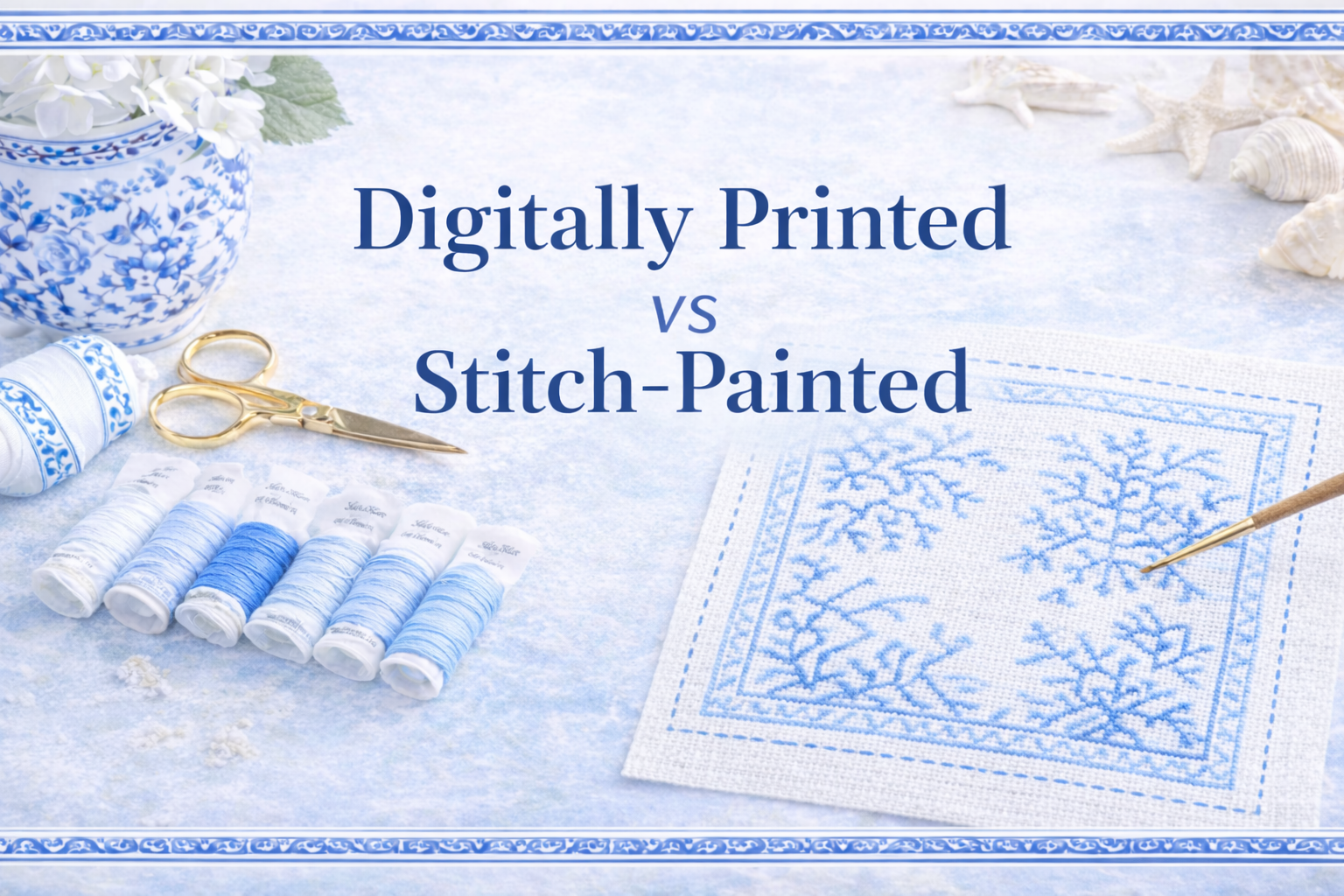
If you’ve ever shopped for needlepoint canvases, you’ve probably seen two terms used often: digitally printed and stitch-painted. At first glance they may look similar, but the production process, stitching experience, and pricing are very different.

Let’s unpack it.


🖥️ Digitally Printed Needlepoint Canvases

https://cdn.shopify.com/s/files/1/0270/2547/3618/files/needlepoint_canvas_color_intersections.jpg?v=1694444312
https://needlepoint.com/cdn/shop/products/three-sisters-pillow-18-mesh-printed-canvas-needlepoint-to-go-881143.jpg?v=1657836329

A digitally printed canvas is created using a printer that transfers the design directly onto blank needlepoint mesh using ink.

How It’s Made:
  1. The designer creates the artwork digitally (often in specialized software).
  2. The design is sized to match the mesh count (13, 14, 18, etc.).
  3. The file is sent to a professional printer.
  4. The design is printed directly onto the canvas mesh.
What You’ll Notice:
  • Colors may appear slightly blended.
  • The ink may not perfectly align to each individual stitch intersection.
  • The back of the canvas often shows visible ink transfer.
  • Sometimes symbols or shading are more “pixelated” or soft-edged.
Benefits:
  • More affordable
  • Faster production
  • Easier for complex shading and gradients
  • Great for beginners or larger projects

Digital printing allows designers to produce canvases efficiently and at scale, which keeps prices lower.


🎨 Stitch-Painted Needlepoint Canvases
https://rittenhouseneedlepoint.com/cdn/shop/files/CharleyHarperCardinalCloseUpOrnamentNeedlepointCanvas.jpg?v=1712104072
https://needlepointus.com/prodimages/18-161xl.jpg

A stitch-painted canvas is painted by hand, one stitch intersection at a time, to match the stitch grid precisely.

How It’s Made:
  1. The design is charted first — just like a counted cross stitch pattern.
  2. Each square on the chart corresponds to one stitch intersection.
  3. A skilled painter paints each stitch individually on the mesh.
  4. The painter carefully follows the chart to ensure exact placement.

There is no “freehand” painting here — it is methodical and technical.

What You’ll Notice:
  • Each stitch square is clearly defined.
  • No guessing where a stitch begins or ends.
  • Clean color blocking.
  • A very crisp stitching experience.

Why Is Hand / Stitch-Painted More Expensive?

Because it is labor-intensive craftsmanship.

Let’s be real — painting 3,000 to 10,000 tiny stitch intersections by hand takes time. A 4×4 inch canvas on 14 mesh contains:

56 stitches across × 56 stitches down = 3,136 stitches

That means over 3,000 individual paint placements — by hand.

Now imagine a 5×7 or larger piece.

You are paying for:

  • Skilled labor
  • Time (often hours per canvas)
  • Precision accuracy
  • Higher paint costs
  • Smaller production runs

It’s not mass production — it’s artisan work.


How Both Types Are Worked From a Chart

Here’s something many stitchers don’t realize:

Both digitally printed and stitch-painted canvases begin the same way — from a chart.

A chart is a gridded design where:

  • Each square equals one stitch.
  • Each color is assigned to a square.
  • The chart controls placement and color transitions.

For digitally printed canvases:

  • The chart file is sent to a printer.
  • The printer applies ink based on pixel mapping.

For stitch-painted canvases:

  • The painter manually follows that same chart.
  • Each stitch square is painted individually.

So the artistic planning stage is identical.
The difference is in how the design gets onto the mesh.


So Which Should You Choose?

It depends on what you value.

Choose digitally printed if you:

  • Want a more affordable option
  • Enjoy shading and painterly effects
  • Are stitching for fun or learning

Choose stitch-painted if you:

  • Want absolute stitch clarity
  • Prefer crisp intersections
  • Appreciate artisan craftsmanship
  • Don’t want to guess color placement

Neither is “wrong.” They simply serve different needs and price points.


Final Thoughts

Needlepoint is already a labor of love. Whether the canvas is digitally printed or stitch-painted, the real magic happens when thread meets mesh.

But understanding the difference helps you appreciate why prices vary — and why hand-painted canvases are considered heirloom-quality investments.

And honestly? Once you’ve stitched a perfectly painted stitch-painted canvas… it’s hard to go back.
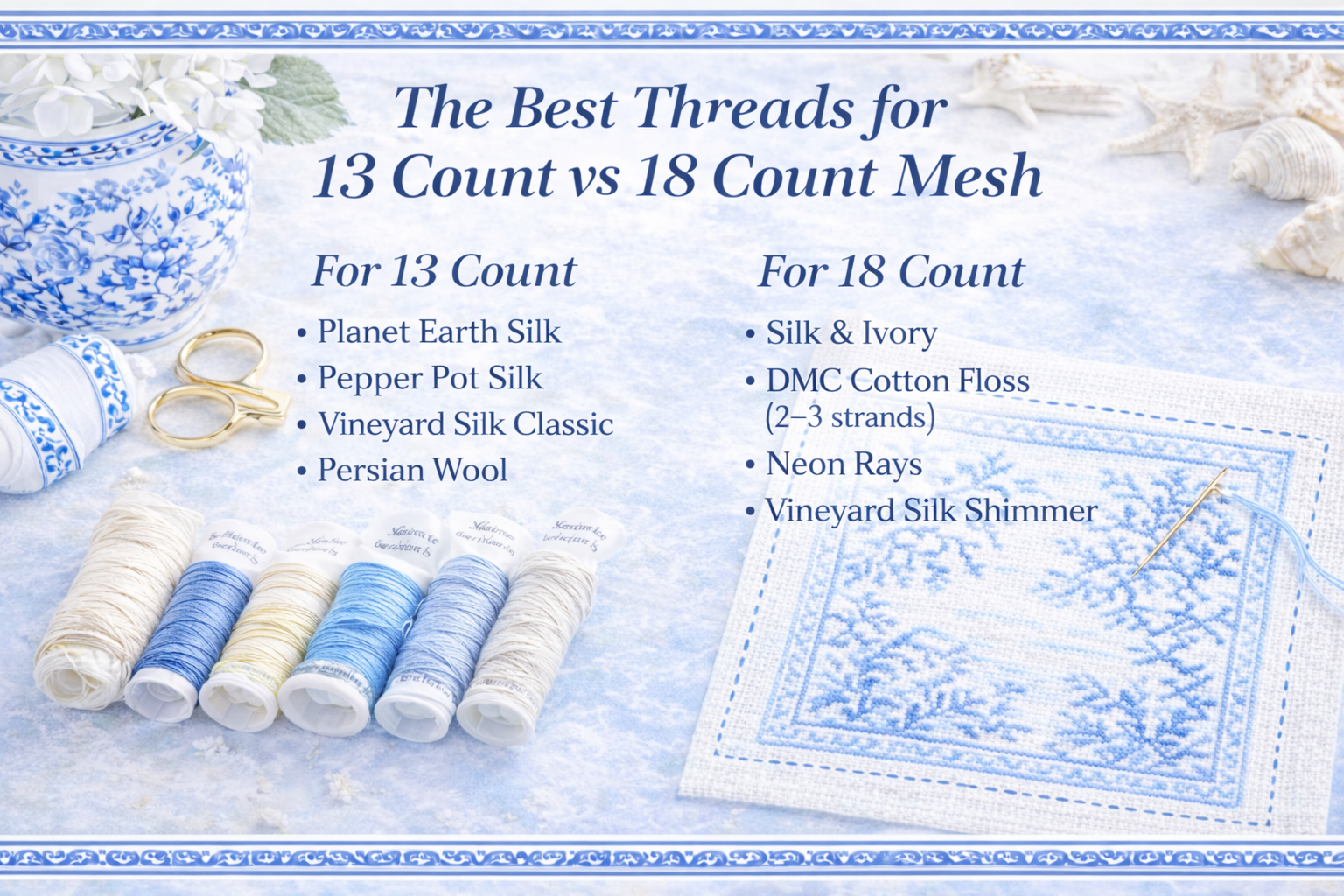
The Best Threads for 13 Count vs 18 Count Needlepoint Canvas

chatgpt image feb 14, 2026, 04 21 16 pm

Choosing the right thread for your mesh count is everything. Too thick? Your stitches look bulky and crowded. Too thin? You’ll see canvas peeking through — and nobody wants that.

Let’s break it down clearly so your stitches look smooth, full, and professional.


🧵 Best Threads for 13 Count Mesh

https://www.kcneedlepoint.com/cdn/shop/files/IMG_2955.jpg?v=1746582281&width=1080
https://www.stitchingfox.com/cdn/shop/files/Vineyard-Silk-Classic-001-090_2_1200x1200.jpg?v=1684435777

13 count mesh has larger holes, which means it needs a heavier thread to properly cover the canvas.

Top Thread Choices for 13 Count:

  • Planet Earth Silk
  • Pepper Pot Silk
  • Vineyard Silk Classic
  • Wool (Persian wool, crewel wool)

These threads are thick enough to give you beautiful, solid coverage without doubling strands.

Why These Work:

  • They fill the larger intersections cleanly.
  • They give a soft, plush finish.
  • They’re forgiving for beginners.
  • Coverage is typically perfect with one strand.

If your canvas is 13 mesh and you’re seeing canvas through your stitches, your thread is probably too thin.


🧵 Best Threads for 18 Count Mesh

https://needlepointjoint.com/cdn/shop/products/Silk_Ivory_91-100.JPG?v=1643053596
https://m.media-amazon.com/images/I/91PBXInbcHL.jpg
https://www.kcneedlepoint.com/cdn/shop/files/11_c98328a3-0a19-4eb0-b20a-430fa773b709.png?v=1769295966&width=1920

18 count mesh has smaller holes, so you need a finer thread for smooth coverage.

Top Thread Choices for 18 Count:

  • Silk & Ivory
  • DMC Cotton Floss (2–3 strands)
  • Neon Rays
  • Vineyard Silk Shimmer
  • Smaller weight silks

Why These Work:

  • They glide easily through tighter mesh.
  • They don’t bulk up intersections.
  • They create crisp, refined detail.
  • They allow for more stitch texture variety.

On 18 mesh, bulky thread will make your canvas stiff and distorted. Finer thread keeps everything elegant and balanced.


Quick Comparison Guide

Mesh CountHole SizeThread WeightLook
13 CountLargerHeavier silk or woolPlush, bold
18 CountSmallerFiner silk, cotton, specialtyDetailed, refined

Pro Tip for Perfect Coverage

Coverage isn’t just about thread weight — it also depends on:

  • Stitch type (Basketweave covers more fully than Continental)
  • Stitch tension
  • Fiber content (silk lays flatter than cotton)

When in doubt, stitch a small test area first. Your eyes will tell you immediately if the coverage feels right.


If you’re designing your own canvases (which I know many of you are 😉), choose your mesh count based on the final look you want:

  • 13 mesh → Bold, classic, traditional needlepoint feel
  • 18 mesh → Refined, detailed, heirloom finish

Both are beautiful. It’s just about intention.

Silk Thread

 Suitable for hand embroidery, cross-stitch, DIY crafts, making beautiful decorations for your bedroom/wall/home, you can also use them to make gifts for your lover, weave friendship bracelets for your intimate friends or decorate your braids and so on

We earn a commission if you make a purchase, at no additional cost to you.

Why You Should Always Leave 3–4 Extra Rows When Stitching Needlepoint Designs

chatgpt image feb 13, 2026, 09 43 43 pm

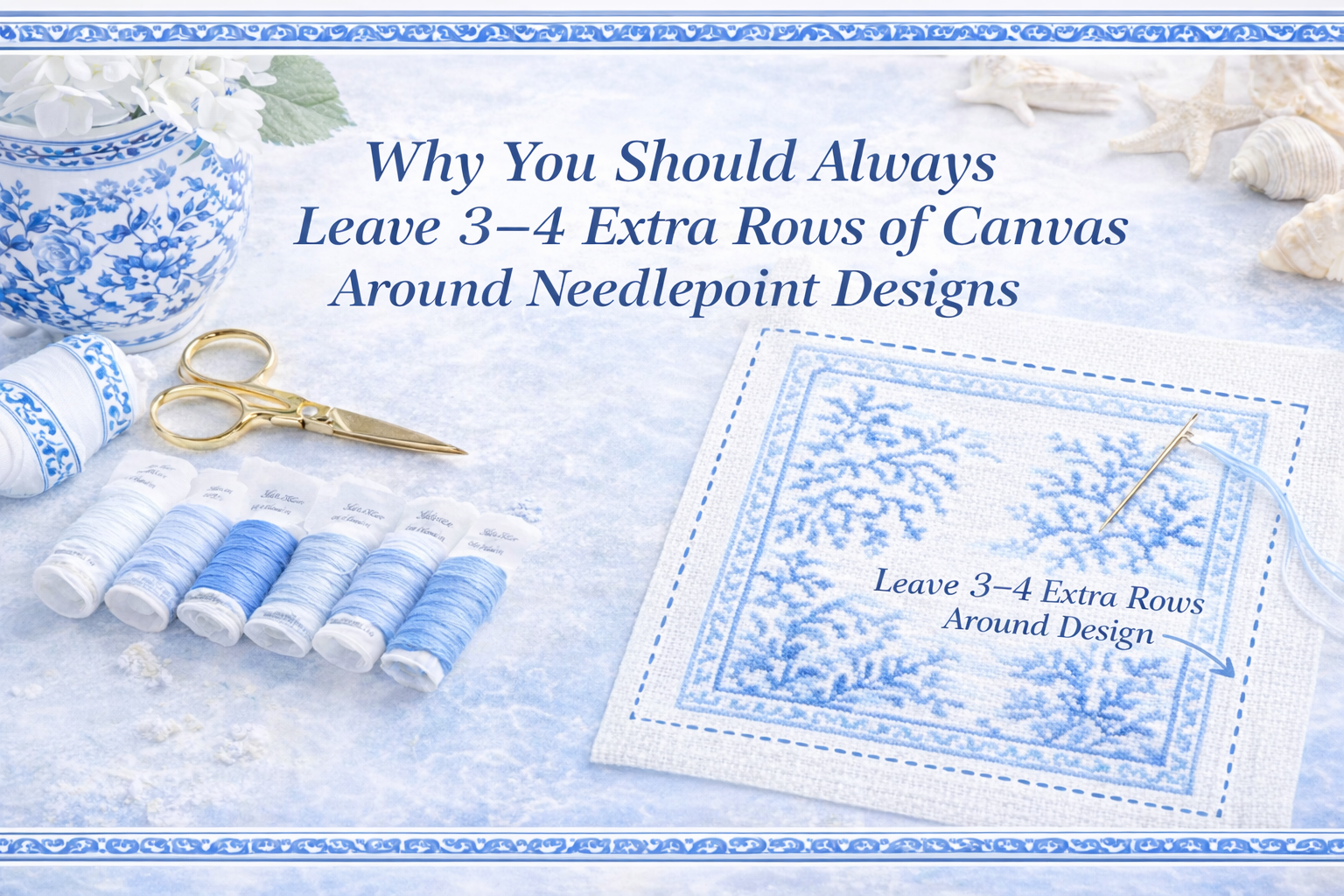
When stitching a needlepoint canvas, one of the most important — and often overlooked — best practices is leaving extra rows of blank stitches around your design. Professional needlepoint finishers strongly recommend allowing at least 1 and half to 2 inches canvas beyond the stitched design area. It also helps to stitch a couple of rows of same color around the borders of the stitched design.. These additional rows provide the necessary working margin finishers need to properly sew, mount, and shape your project into its final form. Whether your project is becoming an ornament, pillow, acrylic insert, door hanger, or coaster, this small detail plays a major role in the final quality of your piece.

Needlepoint finishing requires secure stitching and precise construction. Finishers use the extra canvas edge to sew seams, attach backing materials, and create clean edges without disturbing your decorative stitching. If a design is stitched too close to the edge of the canvas, finishers may be forced to sew through or directly beside decorative stitches. This can cause distortion, thread damage, or uneven shaping. Leaving a buffer zone keeps finishing tension on blank canvas instead of pulling against stitched areas, which helps preserve stitch definition and keeps your finished needlepoint looking crisp and professional.

For needlepoint designers, stitchers, and anyone creating canvases for sale, planning for finishing margins should be part of the design process from the very beginning. When charting digital patterns, painting canvases, or calculating stitch counts, always include this finishing allowance in your total canvas size. Not only does this make finishing easier and safer, but it also increases customer satisfaction and reduces finishing complications. Taking this extra step ensures your needlepoint project transitions smoothly from stitching frame to beautifully finished heirloom-quality piece.


Quick Needlepoint Finishing Margin Tip

Stitch a couple of rows beyond the border of stitched design in same same .

Leave 1.5 to 2 inch minimum of blank canvas around your stitched design
More may be needed for larger or specialty finishing projects
Always confirm with your finisher if unsure

“Before sending your canvas to the finisher, block it using stainless steel T-pins.

To keep edges square and ensure those extra rows stay even, a blocking board makes a big difference.

A good pair of sharp embroidery scissors makes trimming excess canvas clean and precise before finishing

Amazon

Extra Thick Blocking Mats for Wet and Steam Blocking - Includes Pack of 9, 100 T Pins, 10 Pin Blocker and Storage Bag


We earn a commission if you make a purchase, at no additional cost to you.

Creating My Cozy Space

chatgpt image jan 19, 2026, 12 05 51 pm

At BeeBee Designs, needlepoint is more than a pastime—it’s a pause. A return to slow beauty, thoughtful color, and craftsmanship. Your stitching space should reflect that same feeling: serene, intentional, and quietly beautiful.

If you’re dreaming of a cozy needlepoint corner with chinoiserie elegance and coastal ease, here’s how to create a setup that invites you to sit, stitch, and stay awhile.

Your chair sets the tone—and the posture.

Good light is essential—but harsh lighting breaks the mood.The ideal setup:

  • Natural daylight whenever possible
  • A brass, ceramic, or soft white task lamp for evening stitching

Choose warm daylight bulbs that illuminate your canvas without washing out colors.

Frame or Stand: Elegant Support

Stitching should feel effortless, not tiring.

https://www.needlenthread.com/wp-content/uploads/2013/06/needlework-system-4-tabletop-01.jpg

Using a stand or stretcher bars:

  • Keeps tension even
  • Reduces hand and shoulder fatigue
  • Allows you to stitch longer with ease

Practical tools disappear beautifully into a well-designed space.

A tidy setup keeps the stitching peaceful. Keep within reach:

  • Embroidery scissors
  • Needleminder
  • Thread cards
  • Stitch guide or chart

A small lacquered tray or rattan table works perfectly in a coastal-chinoiserie setting.

Threads & Tools: Thoughtfully Organized

One project at a time—always.

https://www.kcneedlepoint.com/cdn/shop/files/CutoutKangaroopaw-191.png?v=1724499232&width=1080

We recommend:

  • One project per bag
  • Threads pre-sorted on cards
  • A small pouch or tin for needles and tools

Organization doesn’t have to be utilitarian—it can be beautiful.

Cozy Layers: The Comfort Factor

This is where the space becomes irresistible.

Add:

  • A soft throw in ivory, blue, or subtle stripe
  • Tea, coffee, or something warm nearby
  • Gentle background music or an audiobook

Needlepoint pairs best with quiet comforts.

A Final Thought from BeeBee Designs

A beautiful needlepoint space doesn’t need to be large or elaborate. It simply needs to support your creativity and reflect your style. When comfort meets intention, stitching becomes a joy you return to again and again.

Slow down. Stitch beautifully.
And make space for what you love. 🪡💙

Amazon
  • Hands-Free Magnifying Glass with Light: The flexible gooseneck design allows you to keep your hands free. It can be hung around your neck and adjusted to different directions and heights, or placed on a table for convenience. Even with prolonged use, it remains comfortable and prevents fatigue. It's perfect for activities like reading, cross-stitching, repairs, and more.
  • 24 Ultra-Bright LEDs Magnifier: The Hands-Free Magnifying Glass features 24 built-in LED lights with adjustable brightness. You can easily adjust the brightness to suit different environments. The LEDs provide bright and even illumination, effectively reducing eye strain and allowing you to read comfortably, even in low-light conditions.
  • USB Charging Design: Our hands-free magnifier features a convenient USB charging system, eliminating the need for 3 AAA batteries. Equipped with a built-in 1000mAh high-capacity rechargeable battery, it provides 8–10 hours of use at medium brightness and 2–3 hours at the highest brightness on a full charge.


We earn a commission if you make a purchase, at no additional cost to you.

A New Year with Needlepoint

55d403d6 5dc8 4f71 ba8f aa988a825858

Welcome — Pull Up a Chair and Let’s Stitch

Hello and welcome — I’m so glad you’re here.

If you love needlepoint the way I do — the rhythm of the stitches, the feel of thread gliding across canvas, the quiet joy of watching a design come to life — then you’re in the right place.

I’m the designer behind BeeBee Designs, and this space was created to celebrate all things needlepoint: the canvases, the stitches, the threads, and the simple pleasure of slowing down and making something beautiful with your hands.

How This All Began

Needlepoint has always felt like home to me. There’s something grounding about it — a craft that invites patience, creativity, and just enough structure to let your imagination roam. Over time, that love grew into designing my own canvases and patterns, inspired by classic Southern style, coastal charm, chinoiserie blues, and timeless motifs that feel both fresh and familiar.

What started as a personal passion has grown into a collection of designs meant to be stitched, enjoyed, gifted, and cherished.

What You’ll Find Here

This blog is meant to be a welcoming place — whether you’re brand new to needlepoint or have stitched more than a few projects over the years.

Here’s what you can expect:

  • Design Spotlights
    I’ll be sharing my needlepoint canvases and digital patterns — how they’re created, what inspired them, and suggestions for stitches and threads that bring them to life.
  • Stitch Talk (the good kind)
    We’ll explore needlepoint stitches together — from beginner-friendly favorites like basketweave and continental to more decorative stitches that add texture and personality. I’ll break them down in a clear, approachable way, with real projects as examples.
  • Threads, Threads, Threads
    Cotton, silk, wool, blends — we’ll talk about thread choices, when to use what, and how different fibers change the look and feel of a piece. I’ll share combinations I love and why they work.
  • Tools & Equipment
    Canvas types, mesh sizes, needles, frames, stretcher bars, lighting — all the practical details that make stitching easier and more enjoyable. No gatekeeping here, just honest guidance.
  • Beginner-Friendly Encouragement
    If you’ve ever thought, “I love needlepoint but I’m not sure where to start,” I see you. This space is judgment-free, encouraging, and meant to help you grow at your own pace.

Looking Ahead

Down the road, I plan to add videos — showing stitches in action, talking through designs, and sharing behind-the-scenes glimpses into my creative process. For now, this blog will focus on thoughtful posts, detailed visuals, and clear explanations you can return to anytime.

Think of it as a growing reference library — part inspiration, part education, part friendly conversation over sweet tea.

A Final Word

Needlepoint isn’t just about the finished piece. It’s about the time spent stitching, the calm it brings, and the story woven into every thread. My hope is that this website becomes a place you return to for ideas, confidence, and a little creative spark when you need it.

Thank you for being here and supporting independent design and the art of making things slowly and beautifully.

Now — let’s stitch something lovely.

Warmly,
Billie
BeeBee Designs